...by Daniel Szego
quote
"On a long enough timeline we will all become Satoshi Nakamoto.."
Daniel Szego

Wednesday, April 25, 2018

Blockchain as a decentralized communication channel


From a practical perspective blockchain can be regarded as a decentralized highly available and reliable communication channel between different actors. It is served at the moment rather to transfer value between the different actors without the primary goal to transfer information, however applications could also be imagined where instead besides of value rather information is exchanged. In this sense applications that should be based on a global decentralized event bus can be also imagined based on blockchain. 

Certainly, performance is still an issue, with the current speed of bitcoin or ethereum such an event bus can not be considered to be too performant. However with technologies as Hashgraph such an applications might be easily imagined. With that the question is which use-cases could be considered to be implemented on a distributed ledger technology that focus not only on value exchange, but somehow on information and value exchange ? 

Thursday, April 19, 2018

Blockchain: the new trust layer of the internet

Cryptocurrencies and blockchain technologies are among the best hyped technologies all around the world. Although the technology first appeared in 2009 first as an initiative of a mysterious person called Satoshi Nakamoto the real strengths of the technology hasn't been recognized for a while. The major reason for the recent hype is that the world is getting aware of the technology and trying to understand which use-cases can be efficiently covered by blockchain apart from cryptocurrencies and Bitcoin.  

To understand the real potential of blockhain, the best was is to compare with an old classical protocol internet protocol, like TCP / IP.. Although it sounds technical pretty technical, the TCP / IP protocol is nothing more than a technical cooperation way between different computers for reliable  data transfer. The protocol appeared around fifty years ago, got a little bit more widespread thirty years ago. At first sight it seemed to be a pure technical game for scientific people or tech geeks to exchange information. However nowadays we can already conclude that the TCP/IP protocol has basically changed the world. It is the basic backbone of the internet itself, practically everything that is regard currently as internet or web is based on this technology. It is important to note from a business or marketing perspective that there are many applications of the technology wasn't foreseen thirty years ago. Examples are Facebook or Twitter that are based on this protocol but no-one could predict previously that the become million dollar industries.

From a practical point of view blockchain or distributed ledger technologies are similar to the TCP/IP. They are simply IT, collaboration protocols but instead of reliable data transfer, they realize a trust protocol between different actors. Let we just imagine the situation that there are several actors throughout the world who want to collaborate with each others and exchange value. As an examples, they want to exchange or transfer a currency. These actors are geographically decentralized, they do not know each other, they do not trust each other and actually they do not want to trust each other. Hence they are not necessarily humans, but for examples different IoT devices communication and transferring value with each other. blockchain protocols simply guarantee from an algorithmic level that these actors can exchange value with each other even with such a circumstances.

Traditionally, trust based services were provided by centralized institutes like banks or insurance companies. They provided a working model for many years, however they suffered from many problems, like inefficiency, slowness or sometimes from censorship. Blockchain technology simply disrupts this institutional business model and provides a much faster, cheaper and fairer way for exchanging value or to realize trust based services on the internet.  

There are two major, a little bit controversy applications of blockchain nowadays: cryptocurrencies and token based platform funding (called ICO at the moment) that are disrupting traditional money transfer and corporate funding. It is important to note however, that they are just applications on the protocol. One of the major reason of the Hype that the world is experimenting currently which other classical trust based services can be realized in a more efficient way with the technology.

Certainly, we are pretty much at the dawn of distributed ledger technologies: there are still many technological drawbacks, due to the lack of regulation many scams, and of course classical institutional trust based industries managing billions of dollars won't adapt so easily. Which fields and use-cases will reach the real mainstream adaptation is something that we will probably see in ten-twenty years.


Sunday, April 15, 2018

Notes on decentralized artificial intelligence

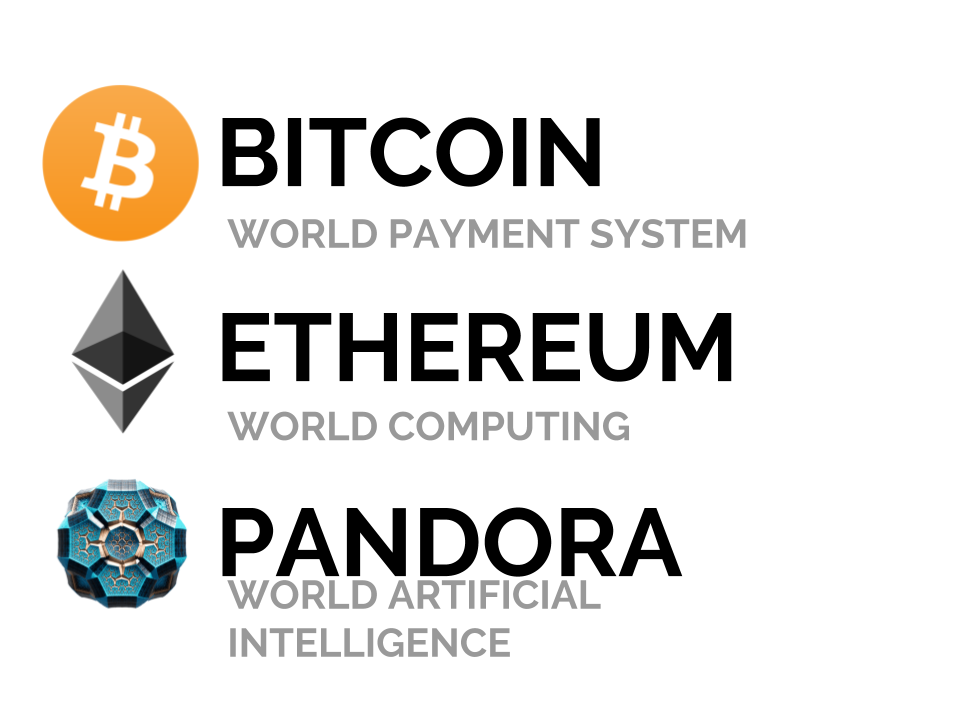
Current trends in artificial intelligence, like Singularity.Net, Neureal or Pandora having a little bit the wrong direction. Overall is the idea, that different artificial intelligence components can be somehow marketed and sold with the help of a marketplace which is realized with the help of a blockchain solution and some tokens. However this idea is not really optimal. Distributed ledger should actively help the integration of the different artificial intelligence component, effectively realizing a hierarchical pattern recognition structure. Tokens should not only represent an economic incentive but they should actively carry information among the different pattern recognition components to effectively function as a data bus of the architecture. Certainly classical architectures like blockchain can not really scalled up to carry such a huge amount of information, however with technologies like Hashgraph functioning solution might be carried out.

Certainly, it is a major question if distributed ledger technology is really required, or possibly there is the chance to put everything to a centralized data bus. 

Consortium blockchains and market positioning


Consortium blockchains are pretty hard to sell, because of the fact that they need basically the coordination of several consortium members including negotiating and renegotiating the cooperation among all of the consortium members. To sell such a solution, you do not only sell a product to one enterprise, but possibly to several enterprises, this can be pretty tough. There are however natural business consortiums, sometimes foundations throughout the world which have the basic activity to integrate several exiting companies and to negotiate or re-negotiate different things or to focus on legal process of the different consortium members. Such a natural consortiums can be ideal starting points to position consortium blockchain solutions. 

Friday, April 13, 2018

Notes on designing a cryptoeconomical protocol


Designing a cryptoeconomical protocol is almost as difficult as designing a cryptography protocol even if we consider only the economical part of the system. The economical part should be designed as much on the engineering principles as possible, including at least the following considerations:
- clear strategy what should be incetivized and what should be discouraged. 
- consideration of some economical attacks, like byzantian attack, bribing attacks, collaboration of attackers...
- economic simulations and assessments what should happen in different normal and extreme situations.
- considerations for scaling the network.

Network effect and blockchain forks


Decentralized applications based on the blockchain are heavily dependent on the network effects. The value of each platform will be strongly depend on how many actors use the network. In this sense, public networks have much more chance to reach mainstream adaptation than the consortium ones. It is actually an interesting question which of the consortium blockhain solutions have the chance to reach mainstream adaptation: probably the ones that have public solutions as well. One thing that is however dangerous for public blockchains is the forking. Forking practically splits the community into two competing parts. However because of the network effect, such a split will not half the value of the individual networks but quarters them, with other words halfing the value of the whole network. 

Barriers of consortium blockchain adaptation


The biggest barrier and drawback of the consortium blockchain solutions should not be looked in the technology itself. Consortium blockchain solutions best suited in industry fields with many different actors and companies. Delivering a solutions to such an industrial field require the an efficient coordination between many different companies probably located in many different countries. Such a coordination require very skilled business analyst people and negotiators before the technology roll-out could be even started.  

ICO-s, market liberalization and marketing


From an economical perspective token sales and ICO-s are liberating the funding and venture capital market and big steps for economical and financial equality in the world.

- Demand: You have 10 euros that you want to invest into a start up business, with the classical funding possibilities you did not have the chance.

- Supply: If you want to launch a new business and you need funding, previously you needed banks and business angels, actually very small amount of people in the world really have the possibility to get funding for a new business.

So, practically everybody who wants to ban token sales like Facebook , Google or regulation saying indirectly for a couple of billion people the following message:

You guys born in poor region ? You do not have access for an efficient financial infrastructure to get funding or to invest? That is your fault, you deserve it, we like it that way. Even if there would be an efficient funding infrastructure that you could use, we ban that.


Honestly, I am not an idealist, world works sometimes this way, we have historical examples for that.

However, after saying indirectly fuck off for a couple of billion people it is pretty difficult to make for any of these parties such a marketing that they are the good guys.

Thursday, April 12, 2018

On fairness of transaction ordering in blockchains


Proof of work and mining systems are actually pretty far from being fair regarding transaction ordering. On the one hand the miners in validators in a Proof of Stake system work as local dictators on the set of transactions, meaning that they can select which transactions are put into the next block. This gives on the one hand the possibility to censor or delay certain transactions. How big this delay might be depends on the competition and collaboration of the miners and validators. On the other hand, as the transactions are usually processed based on transaction fees and miners certainly priories the transactions with the higher transaction fee. This gives the possibility for an average user to game the system, in the sense that it can be sure that a higher fee transaction will be surely prioritized over a lower transaction fee, giving for instance the possibility for a successful double spending attack. 

It is an open question if a blockchain protocol can designed in a fair ordering way. Other distributed ledger technologies like Hashgraph has the fair ordering property.  

Directed decentralized evolution


Decentralized systems supported by, like blockchain or distributed ledger provide the way of creating systems in a self improved way controlled by some kind of a directed evolutionary algorithm. If we consider bitcoin and the mining evolution, the bitcoin protocol directly makes incentives for a directed decentralized evolution resulting the appearance of the more and more efficient and advanced mining devices. Another interesting example might be the cryptokitties application, in which the appearance of the different digital lifeforms are controlled by a market mechanisms.