...by Daniel Szego
quote
"On a long enough timeline we will all become Satoshi Nakamoto.."
Daniel Szego

Wednesday, March 15, 2023

An introduction to tokenized financial securities

Current trends in blockchain research and development can be separated into two major categories. On the one hand, there is a very active research on the infrastructure side of these systems focusing mostly on scalability, privacy issues or cross-chain compatibility solutions of different distributed ledger platforms. Major approaches are layer 1 and layer 2 scaling possibilities. On the other hand, there is very active innovation on the application side as well having tokenization as a basic application level building block. Two of the probably well-known and perhaps over-hyped directions of the last 3 years are the NFT-s (non-fungible tokens) and DeFi (decentralized finance). As these approaches were mostly realized in the public and sometimes crypto-anarchist  blockchain space, a lesser known direction on the regulated field is the trend of tokenized financial securities.
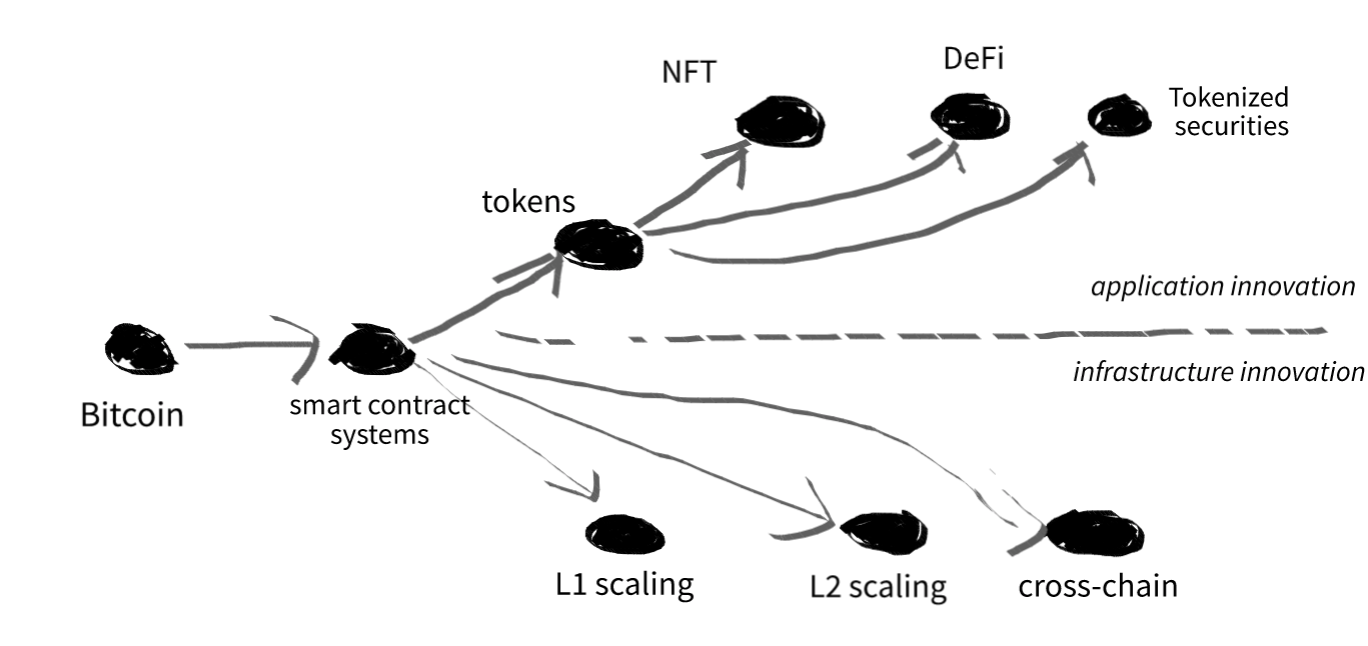

Tokenized financial securities are a new development in the financial industry that involves the use of blockchain technology to issue and manage securities in a digital form. These securities are represented by digital tokens that are secured and managed on a blockchain network. Tokenized financial securities are digital assets that represent ownership in a financial instrument, such as stocks, bonds, green-bonds, or real estate. They are issued through a process known as tokenization, which involves converting the ownership rights of an underlying asset into a digital token on a blockchain network. These tokens are then traded on digital asset exchanges or stored in digital wallets, just like other cryptocurrencies.

It is important to point out the difference between security tokens and tokenized securities.  Security tokens are usually innovative and blockchain native tokens that are considered by the current legislation attempts under the same law as financial securities. It is especially difficult and controversial for native blockchain tokens and most of the decentralized finance (DeFi) protocols. However tokenized financial security considers classical financial securities that already exist for decades with well established regulation. These classical financial instruments are brought to blockchain protocols in a tokenized form.  

One of the key benefits of tokenized financial securities is their potential to increase market liquidity. By enabling the fractional ownership of assets, tokenization allows investors to buy and sell smaller portions of assets, which can increase the number of potential buyers and sellers in a market. This can lead to more efficient price discovery and lower transaction costs. Tokenization also offers greater transparency and security than traditional financial securities. Since tokenized securities are recorded on a blockchain network, all transactions are transparent and immutable. This means that investors can easily track the ownership and transfer of securities, reducing the risk of fraud and errors. Furthermore, tokenization can help to reduce the cost and complexity of issuing and managing financial securities. By using blockchain technology, the process of issuing and trading securities can be streamlined, reducing the need for intermediaries and lowering transaction costs. This can make it easier and cheaper for companies to raise capital, and for investors to access a wider range of investment opportunities.

However, there are also challenges and potential risks associated with tokenized financial securities. One of the main challenges is the lack of regulatory clarity around these new digital assets. While some countries have established regulatory frameworks for digital assets, many others have not, creating uncertainty and potential legal risks for investors and issuers. Additionally, the adoption of tokenized financial securities is still in its early stages, and there are concerns around the scalability and interoperability of blockchain networks. As more assets are tokenized and traded on these networks, there is a risk that they may become congested, leading to slower transaction times and higher costs.

Major categories for tokenized financial securities are:
  • Tokenized stocks: Companies can issue tokenized versions of their stocks, allowing investors to buy and sell them on a blockchain-based platform. This provides a more efficient and transparent way to trade stocks, with lower transaction fees and faster settlement times.
  • Tokenized bonds: Similar to tokenized stocks, companies can issue tokenized versions of their bonds, allowing investors to purchase fractional ownership of the bond. This provides a more accessible way for investors to participate in the bond market.
  • Tokenized real estate: Real estate assets can be tokenized, allowing investors to buy and sell fractional ownership of the property. This provides a more liquid and transparent way to invest in real estate, with lower transaction fees and faster settlement times. One interesting and perhaps controversial direction might be the tokenization of mortgage back securities (MBS) or asset backed securities (ABS) providing a more transparent and possible risk-free approach for the whole industry
  • Tokenized commodities: Commodities like gold and silver can be tokenized, allowing investors to buy and sell fractional ownership of the asset. This provides a more accessible way for investors to participate in the commodity market.
  • Tokenized funds: Investment funds can issue tokens representing ownership in the fund, allowing investors to buy and sell fractional ownership. This provides a more efficient and transparent way to invest in funds, with lower fees and faster settlement times.

In the international examples, we can already find several initiatives for the successful issuance of tokenized securities. An example of this is the tokenization of the BNP Paribas (BNPP) green bond. In the process, short-term tokens representing bonds were issued on the Ethereum blockchain. For the purchased tokens, the issuing institution undertook to officially convert them into the corresponding bond within 48 hours. Another example is Sygnum bank, which provides tokenized securities services to its customers. With its help, during a classic IPO, the issued shares can be listed on the Singapore Digital Exchange in parallel, in tokenized form. As a third example, it is perhaps worth mentioning Quadrant Biosciences, which sold 17% of its entire ownership in tokenized form. Another similar interesting direction is the tokenization of government securities, for which an innovative initiative will be launched in Israel at the beginning of next year, for example, with the support of the Tel Aviv Stock Exchange. Last but not least it is worth mentioning Siemens issuing a digital corporate bond in tokenized form just a couple of weeks ago.

Perhaps the question may arise as to how technically feasible a blockchain, especially public blockchain based securities issuance. The fact that most public blockchains are open, transparent, and accessible to everyone does not fit well with securities regulation. However, it is worth noting that, on the one hand, tokenization does not necessarily have to be implemented on an open blockchain platform, consortium platforms are conceivable, which can be regulated much better. On the other hand, even the most public and open platforms have token standards that can be used to create highly regulated tokens. Such a standard is, for example, ERC-1404, which enables, for example:
  • know your token holder and KYC policies,
  • linked to add KYC documents,
  • whitelisting, blacklisting,
  • blocking a token account,
  • approving or prohibiting token transfer,
  • “hard” coded rules: for example to prohibit trading between regions,
  • token withdrawal,
  • rights and roles (e.g. investor, administrator), etc.
In conclusion, tokenized financial securities represent an exciting new development in the financial industry, with the potential to increase market liquidity, transparency, and efficiency. However, there are also challenges and risks associated with this new technology, including regulatory uncertainty and scalability issues. As the adoption of tokenized financial securities continues to grow, it will be important for regulators, investors, and issuers to work together to ensure that these digital assets are safe, transparent, and accessible to all.

DEFI Algorithmic stablecoin


An algorithmic stablecoin is a type of cryptocurrency that is designed to maintain a stable price by using an algorithmic mechanism to control its supply. Unlike traditional cryptocurrencies, such as Bitcoin, whose value can be highly volatile, stablecoins aim to provide a more stable store of value that can be used for transactions or as a store of wealth.

Algorithmic stablecoins achieve price stability by adjusting the supply of the coin in response to changes in demand. For example, if the price of the stablecoin starts to rise above its target value, the algorithm would increase the supply of the coin, which would in turn bring the price back down. Conversely, if the price starts to fall below its target value, the algorithm would decrease the supply of the coin, which would increase demand and bring the price back up.

Algorithmic stablecoins can be backed by a variety of assets, including other cryptocurrencies, fiat currencies, or even commodities like gold or oil. However, some algorithmic stablecoins are not backed by any underlying asset, but instead rely solely on the algorithmic mechanism to maintain their price stability. These are known as non-collateralized or algorithmic stablecoins.

Classical examples for non-collaterized algorithmic stablecoins are: 

  • Ampleforth (AMPL) - Ampleforth uses an elastic supply mechanism to maintain price stability. When the price of AMPL rises above its target value, the supply of AMPL increases. Conversely, when the price of AMPL falls below its target value, the supply of AMPL decreases.
  • Empty Set Dollar (ESD) - Empty Set Dollar uses a "bonding curve" mechanism to maintain price stability. When the price of ESD rises above its target value, users can mint new ESD by purchasing bonds. When the price of ESD falls below its target value, users can redeem their bonds for ESD, which reduces the supply of ESD in circulation.
  • Frax (FRAX) - Frax uses a "fractional-algorithmic" mechanism to maintain price stability. FRAX is partially backed by USDC, but also uses an algorithmic mechanism to adjust the supply of the coin in response to changes in demand.

It's important to note that non-collateralized algorithmic stablecoins can still be volatile, as their price is dependent on the accuracy and effectiveness of their algorithmic mechanisms.


DEFI: crypto collateralized stablecoin


A crypto collateralized stablecoin is a type of stablecoin that is backed by collateral in the form of cryptocurrency. The idea behind this type of stablecoin is to provide a stable value by pegging it to a fiat currency, such as the US dollar, while also taking advantage of the benefits of cryptocurrency.

To create a crypto collateralized stablecoin, a certain amount of cryptocurrency is deposited as collateral. This collateral is then used to issue the stablecoin, which can be traded on a blockchain network like Ethereum. The stablecoin's value is maintained by the collateral backing it, as the cryptocurrency collateral is held in reserve to ensure the stability of the stablecoin's value.

Classical examples of a crypto collateralized stablecoins include:

  • MakerDAO (MKR): The MakerDAO system issues the Dai stablecoin, which is collateralized by a basket of cryptocurrencies including Ether (ETH), Basic Attention Token (BAT), and other ERC-20 tokens. The value of Dai is maintained through a system of over-collateralization, where the value of the collateral must exceed the value of the Dai issued.
  • Synthetix (SNX): The Synthetix protocol allows users to mint synthetic assets, including a stablecoin called sUSD, using SNX tokens as collateral. The value of sUSD is maintained through a system of collateralization ratios and penalties for under-collateralization.
  • BitUSD (BITUSD): BitUSD is a stablecoin issued on the BitShares blockchain that is collateralized by BitShares (BTS) tokens. The value of BitUSD is maintained through a system of over-collateralization, where the value of the collateral must exceed the value of the BitUSD issued.

One advantage of crypto collateralized stablecoins is that they can be more transparent than traditional fiat-backed stablecoins, as the collateral is held on a public blockchain network. Additionally, they can be more accessible, as they can be traded and exchanged in a decentralized manner without relying on traditional financial institutions. However, they also carry the risk of cryptocurrency market volatility, as changes in the value of the collateral can impact the stability of the stablecoin's value.

Tuesday, March 14, 2023

DEFI: fiat collaterized stablecoin


A fiat-collateralized stablecoin is a type of stablecoin that is backed by a reserve of fiat currency, such as the US dollar or the euro. The issuer of the stablecoin holds an equivalent amount of the fiat currency in reserve to ensure that the stablecoin maintains a stable value.

For example, if a fiat-collateralized stablecoin is pegged to the US dollar, the issuer would hold one US dollar in reserve for every stablecoin that is issued. If the price of the stablecoin were to fluctuate, the issuer would adjust the supply of the stablecoin by either issuing more stablecoins or buying back existing stablecoins to maintain the peg to the US dollar.

Fiat-collateralized stablecoins are considered to be the most stable type of stablecoin because they are backed by a tangible asset that has a stable value in the real world. However, they are also subject to counterparty risk, which means that the value of the stablecoin is dependent on the financial stability of the issuer and their ability to maintain the reserve of fiat currency.

A fiat-collateralized stablecoin works by being backed by a reserve of fiat currency, such as the US dollar or euro, which is held by the issuer of the stablecoin. The value of the stablecoin is pegged to the value of the fiat currency, typically at a 1:1 ratio, and is maintained through the use of smart contracts or other technological mechanisms.

A typical fiat-collateralized stablecoin works as follows:

- The issuer of the stablecoin creates a reserve of fiat currency, such as the US dollar, by depositing it in a bank account or other secure location.

- The issuer then creates and issues stablecoins on a blockchain platform, such as Ethereum, using smart contracts or other mechanisms. Each stablecoin is backed by a specific amount of the reserve fiat currency.

- When someone buys a stablecoin, they send fiat currency to the issuer, who then mints and sends the corresponding number of stablecoins to the buyer.

- To maintain the pegged value, the issuer must hold a reserve of fiat currency equal to the total value of all the stablecoins in circulation. If the value of the stablecoin were to rise or fall, the issuer would adjust the supply of stablecoins by issuing more or buying back existing stablecoins to maintain the peg.

- The issuer can generate revenue from the interest earned on the reserve fiat currency, which can be used to cover operational costs and potentially even offer holders of the stablecoin a yield or interest rate.

Overall, the idea behind a fiat-collateralized stablecoin is to provide a digital asset that is backed by a tangible asset and maintains a stable value, making it useful for transactions and as a store of value.

DEFI: Stablecoin basics


A stablecoin is a type of cryptocurrency that is designed to have a relatively stable value, typically pegged to a specific asset or a basket of assets such as a fiat currency like the US dollar or a commodity like gold. Unlike other cryptocurrencies such as Bitcoin or Ethereum, which can experience high levels of volatility, stablecoins aim to provide a more predictable value and can be used for transactions or as a store of value without the risks associated with other cryptocurrencies. Stablecoins can be issued on various blockchain platforms, and some examples include Tether (USDT), USD Coin (USDC), Dai (DAI), and TrueUSD (TUSD).

Major types of stablecoins are: 

Fiat-collateralized stablecoins: These are stablecoins that are backed by a reserve of fiat currency, such as the US dollar. The issuer of the stablecoin holds an equivalent amount of the fiat currency in reserve to ensure that the stablecoin maintains a stable value. Examples of fiat-collateralized stablecoins include Tether (USDT), USD Coin (USDC), and Paxos Standard (PAX).

Cryptocurrency-collateralized stablecoins: These stablecoins are backed by a reserve of other cryptocurrencies, such as Bitcoin or Ethereum. The value of the stablecoin is maintained by holding a certain amount of the backing cryptocurrency in reserve. Examples of cryptocurrency-collateralized stablecoins include Dai (DAI) and BitUSD.

Algorithmic stablecoins: These are stablecoins that use a complex set of algorithms to maintain a stable value. They do not rely on any collateral to maintain their value and instead adjust their supply based on demand to maintain price stability. Examples of algorithmic stablecoins include Ampleforth (AMPL) and Basis Cash (BAC). However, it's worth noting that algorithmic stablecoins can be more volatile than other types of stablecoins, especially during periods of high demand or low liquidity.

Wednesday, November 16, 2022

CeFiRun and CeFiBankRun

CeFiRun or CeFiBankRun is an economic process where custmers loses trust in custodial crypto service providers with non-transparent balance sheets (typically characterized as CeFi or CeDeFi). Losing trust can result a mass withdrawal of tokens for which some providers are not prepared causing a freeze in customer funds (due to custodiality it is possible). Freezing publicaly funds at one crypto service provider might cause a panic on the market resulting that customers try to withdraw funds from all the similar providers resulting eventually in an escalating short-term economic collapse of the given segment. 

#CeFiRun #CeFiBankRun


Friday, May 21, 2021

Intermediate CA with Explorer or Gatweway on Hyperlegder Fabric


If you use Hyperledger Fabric with hieararchical CA-s and want to use Hyperledger Explorer or gateway, you might as well face with the situation that the tlsCACerts property for the TLS communication must be configured. The thing is that neither intermediate TLS certs or root TLS certs will work here you should create a file that contains the whole certificate chain (just copy in one file first the root cert then the direct intermediate cert, then the next intermediate cert and son on). 

Friday, December 25, 2020

Viewing channel transaction and genesis block in Hyperledger Fabric


Channel transaction and genesis block in Hyperldger Fabric are stored in an encoded way. However you can take a look on the content of the files with either with the configtxgen or with the configtxlator tool tool and with the help of the following commands: 

Viewing the content of the genesis block with configtxgen:

  configtxgen -inspectBlock genesis.block

With configtxlator, you have to start the tool first:

  configtxlator start

Viewing the content of the genesis block with configtxlator:

  curl -X POST --data-binary @genesis.block http://127.0.0.1:7059/protolator/decode/common.Block >    genesis.json

Viewing the content of the channel.tx with configtxlator:

 curl -X POST --data-binary @mychannel.tx         http://127.0.0.1:7059/protolator/decode/common.Envelope > mychannel.json

Viewing the content of the anchor transaction Org1MSPanchor.tx with configtxlator:

 curl -X POST --data-binary @Org1MSPanchors.tx       http://127.0.0.1:7059/protolator/decode/common.Envelope > Org1MSPanchors.json


Hyperledger Fabric CLI commands summarized


Some of the most important Fabric CLI commands are the followings.

Create channel:

  peer channel create

Fetching block and channel information, it is required at new peer joining the netwotk:

  peer channel fetch

Joining the channel:  

  peer channel join

Listing channels:

  peer channel list

Updating channels: (like at sending anchor peer update)

  peer channel update

Package chanincode:

  peer lifecycle chaincode package

Installing chaincode (must be executed at each peer):

  lifecycle chaincode install

Query installed chaincode

  lifecycle chaincode install

Approve chaincode (it must be executed at each organisation)

  peer lifecycle chaincode approveformyorg

Check if chaincode is ready for the commitment

  lifecycle chaincode checkcommitreadiness

Committing chaincode

  peer lifecycle chaincode commit

Check if chaincode is committed

  peer lifecycle chaincode querycommitted

Invoking chaincode

  peer chaincode invoke

Query chaincode

  peer chaincode query